Saturday, March 17, 2012

Season extension with mini-tunnels

Ajay Nair
Assistant Professor
Department of Horticulture, Iowa State University


Short growing seasons are typical in Iowa (although 2012 can change things around!). The risk of frost damage and low soil and air temperatures during the growing season are major constraints for vegetable production. Strategies that help extend growing seasons are thus imperative for successful production of fresh and quality produce. With increased interest and demand for locally grown produce growers are diversifying their production operations and integrating a wide variety of crops into their cropping systems. A crop that could be easily grown and could fetch a good price in the market is lettuce. The following video was recorded in November 2011 and discusses the use of mini-tunnels for lettuce production in October. This study also investigated the effect of row cover and calcium application on fall lettuce (Lactuca sativa L. ‘Ermosa’) production at the Horticulture Research Station, Iowa State University, Ames, Iowa. Three week old lettuce transplants were transplanted on 3 October, 2011on raised beds covered with black plastic mulch. A medium weight row cover was installed over the row cover treatment one week after transplanting.  


Tuesday, March 13, 2012

Transplant Production Workshop (Saturday April 7, 2012)


Ajay Nair
Department of Horticulture
Iowa State University
Department of Horticulture in partnership with The Leopold Center for Sustainable Agriculture is organizing a Vegetable Transplant Production Workshop for home gardeners, vegetable producers, greenhouse growers, and folks interested in growing their own vegetables from transplants.  The workshop titled "Tips and Tricks of Vegetable Transplant Production," is scheduled for Saturday, April 7, 2012 at Horticulture Hall on the Iowa State campus in Ames. The day-long workshop, 9:30 a.m. to 3 p.m., will focus on specific areas of transplant production — greenhouse lighting, water quality, nutrient medium, organic production and pest management. Participants also would have an opportunity to get hands-on experience evaluating transplants grown in different growing medium and different cell sizes. One of the workshop sessions will provide information on some new medium alternatives for vegetable transplant production including dried distiller’s grain with solubles (DDGS) and biochar.
Advantages of transplants are many — uniform growth, robust growth and healthy root system. Production of transplants involves advance planning and optimum use of greenhouse resources. This is critical for vegetable transplants like tomato and pepper that are in the greenhouse for six to seven weeks. Workshop sessions will explain proper sanitation measures, quality seed and growing mediums, and how to manage greenhouse environments so growers can produce healthy, disease free and quality transplants that contribute towards higher yield and productivity.
Registration before April 1 is $15; after that date registration is $20. Access program information and registration by clicking any of the links below:

Saturday, February 25, 2012

Composting is fun !

Ajay Nair
Assistant Professor, Department of Horticulture
Iowa State University

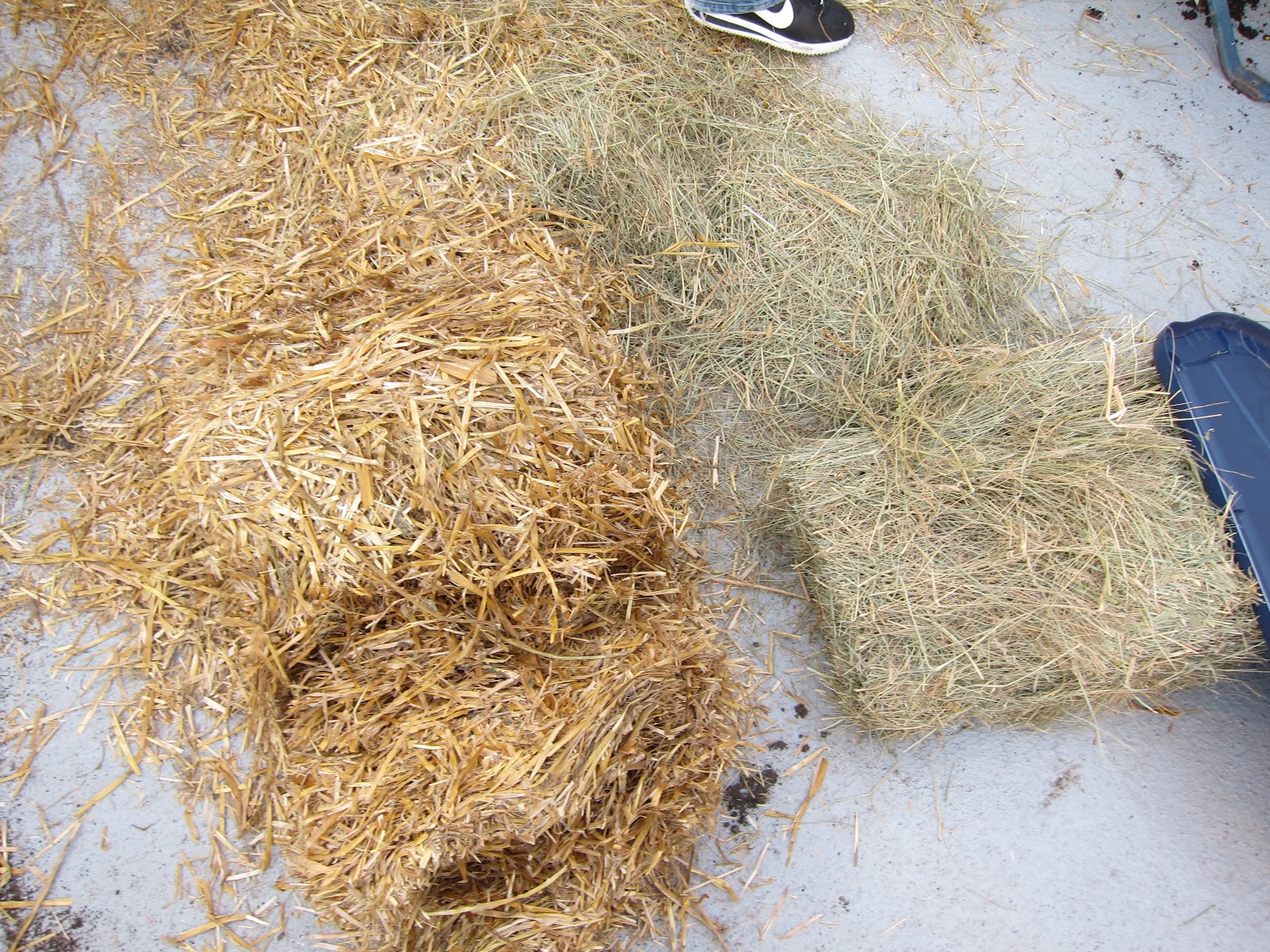
Seems winter has spared Iowa this time (true at least for Ames). Everyone was busy doing something this winter- running, biking, jogging, and for us it was composting ! In January students in the Vegetable Production and Management course (HORT 471) started creating something which is valuable for most vegetable production systems, yes you got it - COMPOST. As part of the course students had hands-on experience in creating a compost pile. The recipe included straw, hay, horse manure (thanks to ISU horse barn), dining waste (thanks to ISU dining services), mature comopst  (from ISU compost facility), straw and water. Students observed the quick change in temperature from 75F on the day of mixing to 160F in 3 days. It was quite an activity and lots of fun ! Cheers to the Compost gang ! Please enjoy the pictures below !


Monday, December 5, 2011

Great Plains Growers Conference January 5th - 7th 2012


I am sure a number of you are aware of the Great Plains Growers Conference in Missouri. Fruit and vegetable growers from across Missouri and the Midwest should make plans to attend the Great Plains Growers Conference and Trade Show on January 5th, 6th and 7th, 2012, at the Fulkerson Center on the Missouri Western State University campus, St. Joseph, Missouri.

The conference will cover many topics including:  fruit and vegetable production, beginning and advanced organic, high tunnel operation, community supported agriculture, agritourism, beekeeping, food safety, farmers market, urban/community gardening, marketing and cut flowers.  The conference also features a trade show with dealers in equipment, tools, seed, chemicals, containers and other horticulture supplies. With all the conference has to offer it is one of the most comprehensive vegetable conferences in the Midwest. A program and registration form is on the web: http://www.greatplainsgrowers.org   or call the Buchanan County Extension office (816) 279-1691.  Pre-registration is open until December 23rd 2011

Sunday, October 9, 2011

How about harvesting lettuce for thanksgiving !

Ajay Nair
Department of Horticulture, Iowa State University


Fresh, crisp, and savory butterhead lettuce for thanksgiving ! at least that is what our lab is aiming for. We recently planted a lettuce trial at the Iowa State University Horticulture Research Station to evaluate the feasibility of a lettuce crop planted as late as 3rd October. Lettuce transplants were grown in the greenhouse for 3 weeks and later hardened off outside for a week. The objective of the study is to evaluate  season extension strategies through the use of row covers and high tunnels. Lettuce transplants were planted outside and in high tunnel on 3rd October 2011.  We planted two rows of lettuce on raised beds with plastic; 10 inch spacing between rows and 8 inch spacing between plants within a row.  Row cover will be installed during the second week of October. 

Transplanting in high tunnel
Field planting of lettuce


Lettuce is an excellent cool season crop that can be grown in 70 days from seed to harvest. Transplant production takes around 20-25 days (including hardening period) followed by 40 to 45 day growth leading to harvest. Lettuce is adapted to cool growing conditions with the optimum temperatures for growth of 60 to 650F. Sensors have been installed both above and below ground to record soil and air temperature. Results from the experiment will provide data on microclimate modification resulting from the use of row covers. Hopefully our results will provide growers with useful information on season extension strategies and a green thanksgiving meal ! 

Monday, September 12, 2011

Winter rye: a versatile cover crop


Ajay Nair
Department of Horticulture, Iowa State University

Winter rye (Secale cereale L.) is one of the most popular and versatile cover crop in many regions of United States. Because of its cold hardiness winter rye is the only cover crop that can be planted as late as in November or even December in the Midwest and the Northeast. Rye has a wide seeding range from 60-120lb/A and is relatively less expensive ($12-15 for a 50 lb bag). Winter rye can also be grown in mixtures with a legume such as hairy vetch. When growing a winter rye and legume mixture, the rate of winter rye seeding should be reduced to half of its original seeding rate.

Rye cover crop in spring
Cover crop being mowed


Once established in the late fall, rye roots hold the soil protecting it from erosion and compaction due to rains in the fall and spring. The above ground biomass helps captures residual nitrogen that would have otherwise leached away. Rapid growth of rye plant shades the ground and suppresses growth of winter weeds.   Winter rye and its residues release plant growth-inhibiting substances called alleclochemicals that are active against suppressing weeds such as pigweeds, lambsquarters, purslane, and crabgrass. A fast-growing rye cover crop competes strongly for light, nutrients, moisture, and space, and can thereby suppress weed growth and development. As the temperatures increase in the spring, rye produces large biomass which is generally mowed and incorporated into the soil. This stimulates soil microorganisms and adds soil organic matter. Also, because of its potential to produce large biomass, rye has been successfully used in no-till cropping systems, especially for vegetables such as pumpkins and squashes.  
All of these characteristics make winter rye an excellent cover crop for our region and depending upon their rotation plans growers should consider incorporating rye into their production systems. To summarize, benefits of rye cover crop include:
1) Reduction in soil erosion
2) Weed suppression
3) Improvements in soil physical, chemical, and biological properties
4) Recycling of nitrogen and other nutrients
5) Enhancement of cropping system diversity
6) Habitat for beneficial insects
7) Use in no-till production systems

Thursday, September 1, 2011

Its time to cover our soil !

Ajay Nair
Department of Horticulture, Iowa State University

When it comes to reducing soil erosion, suppressing weeds, improving soil fertility and health, increasing water holding capacity, and soil organic matter, there is nothing that comes to mind other than COVER CROPS. Cover crops are crops that are grown to cover bare soil between cash crop plantings, however its impact on biological, chemical, and physical parameters of a production system is far reaching and substantial. Cover cropping provides numerous benefits (mentioned above) which make them attractive and useful in any cropping system.  As we are inching towards our fall season, some overwintering cover crops that could be fall planted in Iowa include winter rye, hairy vetch, oats, winter wheat, and some clovers. Although there are a number of choices, growers should chose cover crops that would fit their cropping system and addresses a specific need or problem. If addition of organic matter and weed suppression is a priority, then winter rye would be a better choice. Leguminous cover crop for example  hairy vetch could be utilized when addition nitrogen is the primary goal.


Our lab in the Department of Horticulture at Iowa State University recently set up a cover crop study focusing on cover crop combinations that would enhance nutrient cycling, soil biology & quality,  and improve vegetable production.We are testing winter rye and some other cover crops, individually and in combinations, to develop cover cropping systems that can be utilized for vegetable production in Iowa.  Some aspects of interest include weed suppression, nitrogen management, and crop production. Cover crops seeds were recently broadcasted, incorporated and irrigated (pictures above).